




The pharmaceutical industry in India stands as a global superpower, supplying affordable, lifesaving medicines across the globe. Known as the “pharmacy of the world,” India’s pharmaceutical sector owes much of its global reputation to strict quality standards and rigorous compliance frameworks. At the heart of this reputation lies the standard of World Health Organization Good Manufacturing Practices (WHO-GMP).
Selecting a reliable WHO-GMP certified pharma company in India is a critical decision for healthcare providers, distributors, exporters, and pharma franchises. Quality cannot be tested into a finished product; it must be built into every stage of the manufacturing process.
In this comprehensive guide, we will explore what WHO-GMP certification entails, why it is essential for pharmaceutical manufacturing standards in India, and how choosing a quality-driven partner like Pacitora Biotech can elevate your business in both domestic and international markets.
India’s pharmaceutical landscape has evolved rapidly over the past few decades. Today, the nation is home to thousands of manufacturing units producing formulations ranging from tablets and capsules to complex injectables and nutraceuticals. However, with thousands of suppliers operating in the market, distinguishing between standard production units and world-class manufacturing partners becomes essential.
WHO-GMP certified pharma manufacturers in India play a pivotal role in ensuring that patients receive medications that are safe, effective, and uniform in therapeutic value. Whether you are looking for a third-party contract manufacturing partner, expanding a PCD (Proproitor-Distributor) pharma franchise, or sourcing formulations for global export, partnering with a manufacturer that adheres strictly to Good Manufacturing Practices is non-negotiable.
To understand the value of a GMP-certified pharmaceutical company, it is important to clarify what WHO – GMP actually represents.
Good Manufacturing Practices (GMP) are a system of guidelines designed to ensure that pharmaceutical products are consistently produced and controlled according to strict quality standards. These guidelines cover all aspects of production, from the raw materials, premises, and equipment to the training and personal hygiene of staff.
It is worth noting a key distinction in regulatory terminology: the World Health Organization (WHO) establishes international guidelines, but it does not directly inspect or certify individual pharmaceutical facilities. Instead, national regulatory agencies issue WHO-GMP compliance certificates based on WHO guidelines.
In India, the national regulatory agency is the Central Drugs Standard Control Organisation (CDSCO), working alongside state drug control departments. When a facility meets the stringent requirements outlined in WHO guidelines, national regulators conduct audits and issue the formal WHO-GMP compliance certificate.
For detailed official guidance on international manufacturing standards, you can review the World Health Organization’s GMP Guidelines.
Pharmaceutical manufacturing carries a unique responsibility. A minor error in formulation, raw material handling, or packaging can result in sub-potent, ineffective, or dangerous medications.
WHO-GMP standards minimize risks inherent in pharmaceutical production that cannot be eliminated through final product testing alone.
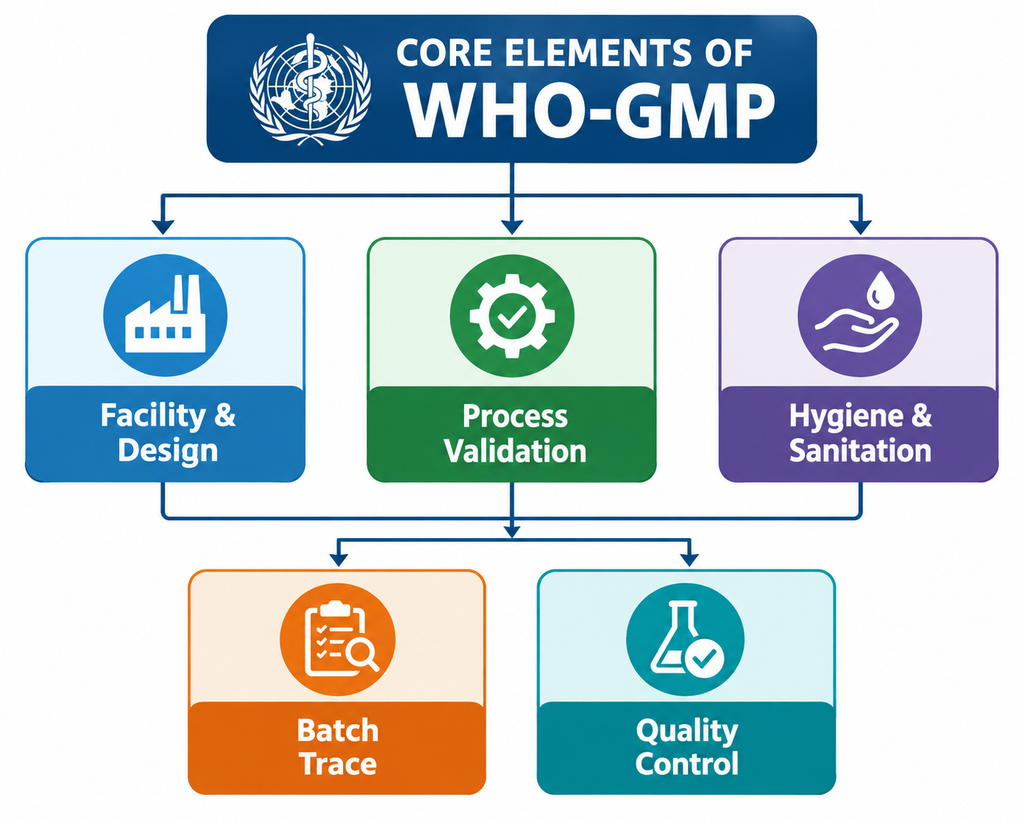
Key areas governed by WHO-GMP guidelines include:
By adhering to these rigorous standards, quality pharmaceutical manufacturing ensures that every dose delivered to a patient maintains identical quality and efficacy.
Partnering with a WHO-GMP certified pharma company in India offers significant commercial, regulatory, and operational advantages for healthcare businesses:
Products manufactured under WHO-GMP standards undergo rigorous testing and process verification. This reduces batch-to-batch variation and guarantees therapeutic effectiveness.
Quality is the cornerstone of trust in healthcare. Aligning your brand with certified pharmaceutical manufacturing companies in India strengthens credibility among doctors, pharmacists, and end-users.
If you plan to export medicines or participate in government tenders, proof of GMP compliance is standard practice. Certified manufacturers maintain documentation that simplifies market authorization and regulatory registration.
Uncertified facilities carry higher risks of batch failures, contamination, and product recalls. Recalls disrupt business operations and damage brand trust. Working with a compliant partner protects your business reputation.
Most importing nations require pharmaceutical products to be manufactured in facilities compliant with WHO guidelines. Working with certified manufacturers opens doors to international trade across Africa, Asia, Latin America, and beyond.
Quality in pharmaceutical manufacturing depends on two distinct but complementary disciplines: Pharmaceutical Quality Assurance (QA) and Quality Control (QC).
| Feature | Quality Assurance (QA) | Quality Control (QC) |
| Focus | Process-oriented | Product-oriented |
| Objective | Prevent defects through systematic processes | Detect defects in raw materials and finished goods |
| Activities | SOP creation, auditing, validation, documentation | Analytical testing, assay testing, stability studies |
| Scope | Covers the entire manufacturing ecosystem | Focuses on specific samples and batches |
A leading GMP-certified pharmaceutical company maintains dedicated QA and QC departments equipped with advanced analytical instrumentation, such as:
These systems ensure that raw materials, active pharmaceutical ingredients (APIs), and finished dosage forms strictly meet pharmacopoeial monographs (IP/BP/USP).
Choosing the right pharmaceutical business partnership in India requires careful evaluation. Beyond basic price points, businesses should assess long-term operational capabilities.
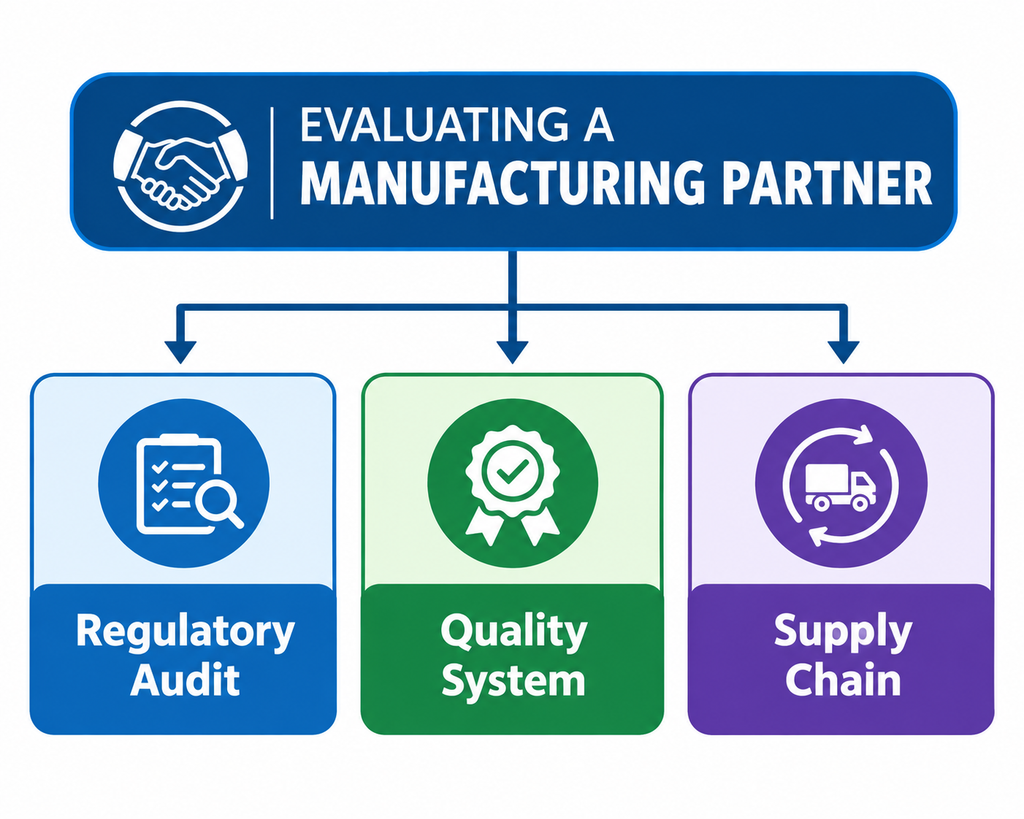
The demand for high-quality healthcare products is growing rapidly across domestic and foreign markets.
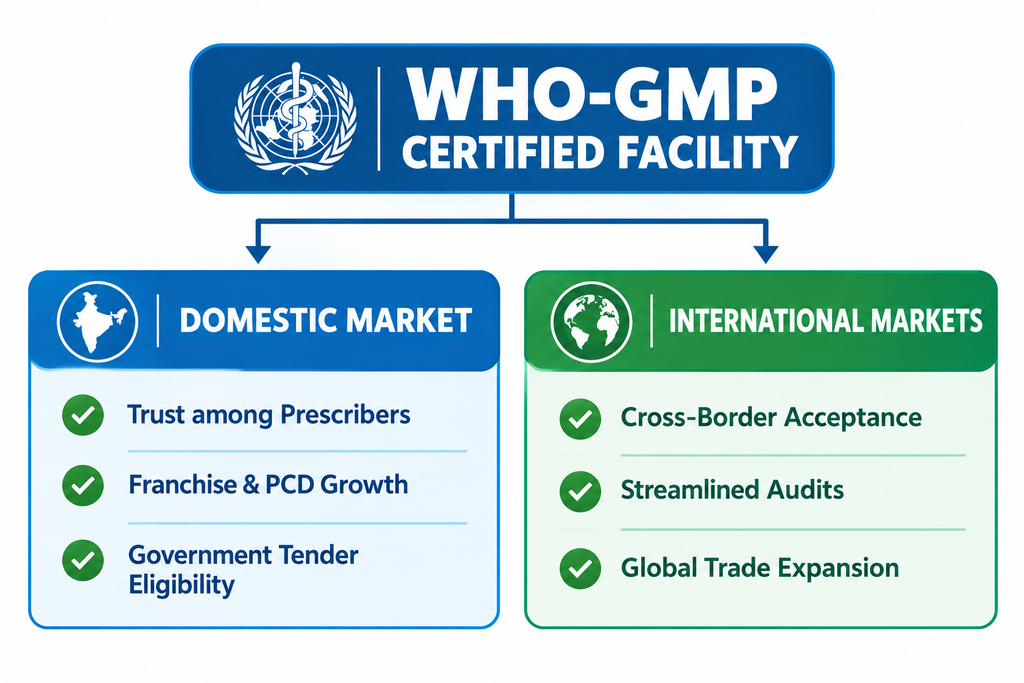
In India, healthcare professionals and consumers are increasingly aware of pharmaceutical quality. Doctors prefer prescribing formulations manufactured by reputable facilities that follow strict quality standards. Furthermore, participation in government healthcare supply programs typically requires verified manufacturing standards.
For exporters, WHO-GMP compliance serves as an international passport. Harmonized quality guidelines reduce trade barriers, allowing Indian exporters to register products across developing and developed economies efficiently.
When searching for the right WHO-GMP certified pharma manufacturers in India, evaluate these operational factors:
When looking for dependable partners focused on high standards and business integrity, Pacitora Biotech offers a strong choice for pharmaceutical collaborations in India.
Pacitora Biotech prioritizes quality across its operations. By focusing on established manufacturing standards and rigorous quality assurance protocols, the company delivers reliable therapeutic formulations designed to meet market expectations.
Pacitora Biotech offers a broad product catalog covering key therapeutic segments, including:
For businesses seeking a trustworthy pharmaceutical business partnership in India, Pacitora Biotech provides tailored services, including:
By choosing Pacitora Biotech, partners gain access to professional support, enabling them to build a sustainable and respected brand presence.
The Indian pharmaceutical landscape is undergoing significant technological and regulatory changes. Modernization initiatives, such as the updated Schedule M regulations introduced by India’s Ministry of Health, aim to align national standards directly with international expectations.
Key trends shaping the future of pharmaceutical manufacturing in India include:
Companies that commit early to robust manufacturing protocols, including standard-setting partners like Pacitora Biotech, are well-positioned to lead this evolving healthcare landscape.

A: WHO-GMP stands for World Health Organization Good Manufacturing Practices. It is an international set of guidelines designed to ensure that pharmaceutical products are consistently produced and controlled according to strict quality standards appropriate for their intended use.
A: No, the WHO itself does not directly inspect or certify individual pharmaceutical manufacturing units. National regulatory bodies, such as India’s Central Drugs Standard Control Organisation (CDSCO) and state drug authorities, inspect facilities and issue WHO-GMP compliance certificates based on WHO guidelines.
A: Partnering with a compliant manufacturer ensures high product efficacy, safety, and consistent batch quality. This builds trust among prescribers and healthcare professionals, protecting your brand reputation and reducing the risk of batch failures or regulatory issues.
A: You can request valid drug manufacturing licenses, regulatory certificates issued by state or central drug control bodies, conduct on-site or virtual audits of the facility, and evaluate their quality assurance and quality control ( QA / QC ) infrastructure.
A: Pacitora Biotech provides high-quality pharmaceutical formulation solutions, including third-party contract manufacturing services and PCD pharma franchise opportunities across diverse therapeutic segments, supported by strong quality control standards and dedicated customer service.
Selecting a trustworthy WHO-GMP certified pharma company in India is a fundamental step toward building a successful pharmaceutical enterprise. High manufacturing standards ensure patient safety, protect brand integrity, and unlock long-term business growth across domestic and global markets.
By evaluating potential partners on quality control frameworks, facility standards, and operational reliability, you lay a solid foundation for sustainable commercial success.
Whether you are expanding an existing business or starting a new pharmaceutical venture, partnering with a quality-focused provider like Pacitora Biotech delivers the credibility, product efficacy, and operational support necessary to succeed in today’s competitive market.